As printed on the site
The national landmark line
Separate from the about page's founding year and member count, the 2011 site carried a history page describing the town itself rather than the association's own membership. It opened with a direct claim: Cape May was "the oldest seashore retreat in the United States," hosting summer visitors since the early 1800s.
The page closed with a second claim of similar weight: the federal government had declared the entire town a National Historic Landmark, with no further detail attached to either statement.
The claim about when it began
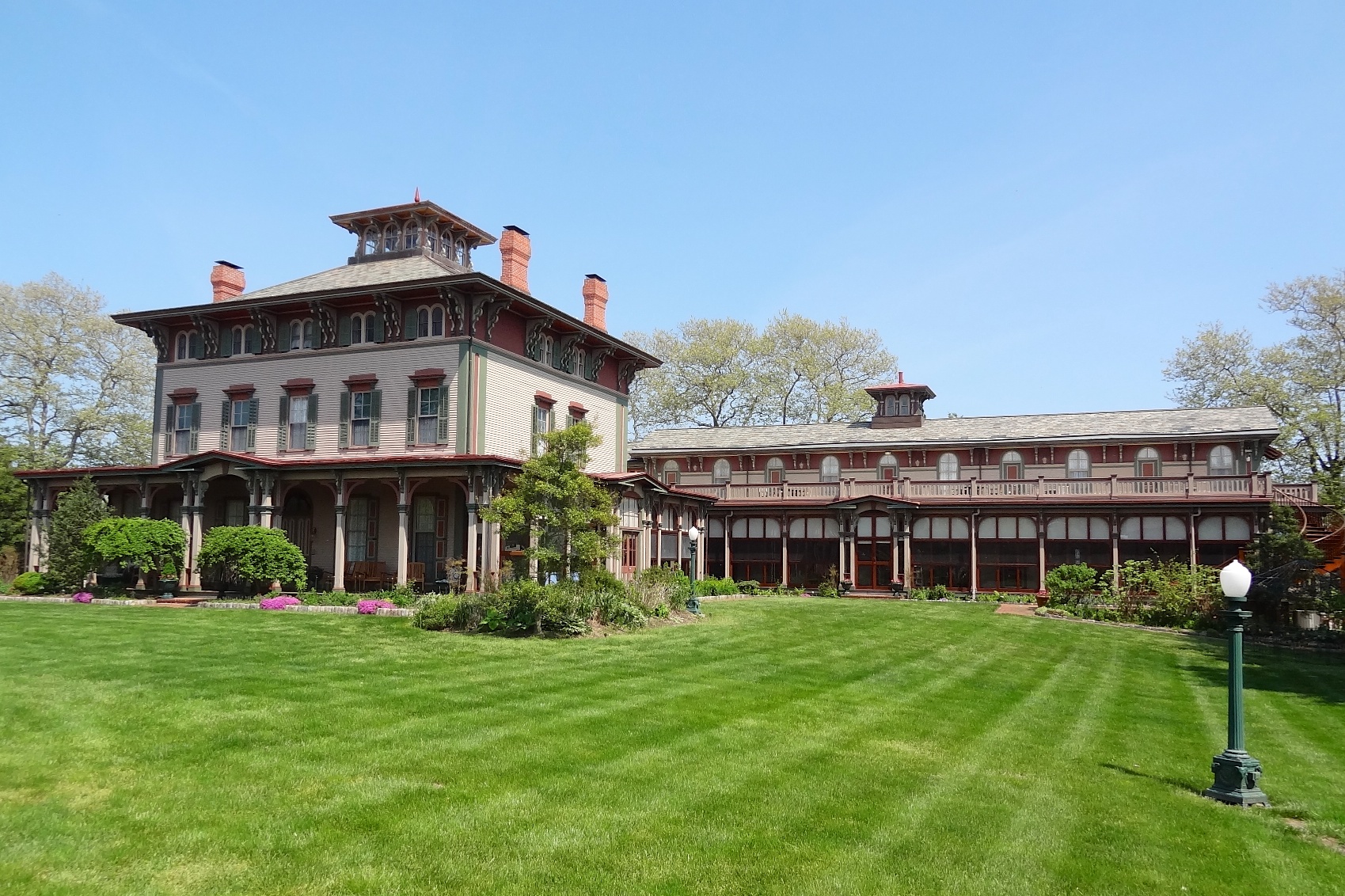
The page's own explanation connects the age claim directly to the town's architecture: summer "cottages" built for 19th-century visitors were, over time, converted by preservation-minded innkeepers into bed and breakfast inns, guest houses, suites, and apartments. Several historic hotels, the page said, had survived more than a hundred years intact by the time of writing. That sentence lines up closely with the construction cutoff the same era's about page used, since a building converted from a genuine 19th-century cottage would comfortably predate either 1910 or 1920 without needing any special pleading or exception.
The page did not cite any specific source for the phrase "oldest seashore retreat in the United States." It is presented as settled, established fact, in the same flat and confident tone the about page used for its member count and construction cutoff elsewhere on the site, with no softening hedge like "widely considered" or "often described as" attached anywhere to the sentence, in either of its two separate appearances across the page's own text and overall layout.
The claim about federal recognition
"The federal government has declared the entire town a National Historic Landmark," the page states, directly following the architecture paragraph without a transition sentence connecting the two ideas. No date is attached to the declaration anywhere on the page, no specific agency is named beyond "the federal government" in general terms, and no landmark registry number or reference of any kind appears on the page at all, leaving nothing a reader could independently check against any official source whatsoever or a government listing of any kind at all, state, local, or federal.
This is a claim about the town of Cape May as a whole, not about the association's own 40 or more members individually or as a group of separately listed properties. A member property's historic status, on this page's own logic, rests on the town-wide designation plus the age of the specific building, rather than on any separate landmark listing attached directly to that one address, which no page in this archive provides for any single property by name or by address.
How this connects to the association's own rules
The history page gives a plausible reason for the shape of the membership rules covered elsewhere in this wave: if Cape May's identity rests on preserved 19th-century architecture spread across the whole town, an association built around a construction-date cutoff is, in effect, applying that same town-wide designation at the level of individual member properties rather than inventing its own separate standard. The small Hotels category and the much larger Bed and Breakfasts category both drew from the same pool of converted historic buildings this history page describes in general terms, across every type of membership the association offered.
None of the ten-day hotline rules, the driving directions, or the activities categories reference this history page directly anywhere this archive has captured. It functions as background for the site as a whole rather than as a page a visitor would need to read before calling the hotline or planning the drive down to Cape May itself, since none of those practical pages assume a reader has seen it first.
What is missing from the page
No photograph accompanies either claim in this archive's capture of the page. No specific building is named anywhere as a concrete example of the "100 years or more" survival the page describes only in general terms, without pointing to any one address. The page credits its own design to "Grant Advertising Design" and its photographs to two named photographers, a detail covered separately and in full in the article on the site's two different credit lines, but that particular credit is for the site's own construction and layout, not for either historical claim made on this specific page.
No mention is made of when the town's own landmark status, if genuine, might have been designated, which would normally sit alongside such a claim in a more formal historical account rather than a one-line summary sentence. A reader looking for that date, or for the registry entry itself, has nowhere in this archive to find it, on this page or any other this project reviewed across either wave of research into this one site.
Reading a sweeping claim carefully
"Oldest in the United States" and "the federal government has declared" are both large, confident-sounding claims printed here without any citation in this archive's capture of the page. Neither claim is contradicted elsewhere in the captured pages this project reviewed across either wave, and neither is independently confirmed by anything else in this archive either, one way or the other. The honest record is simply that the association's own 2011 page made both claims, in those exact words, with no source line attached anywhere to back either one up.
That is not the same as calling the claims false. It is the same careful distance this wave has kept from every other round number and flat statement found across these pages, from the member count to the construction cutoff: printed is not the same as proven, and this project treats both the same way throughout, without favoring the more impressive claim simply because it sounds more complete or more official in its wording than a plainer, more modest sentence ever would have on the very same printed page.
Questions
Is Cape May actually a National Historic Landmark?
This archive only confirms that the association's 2011 page stated it was. It does not hold a separate federal registry document to verify the claim independently against.
Does this page name specific landmark buildings?
No individual building is named on this page as an example. The claim covers the town as a whole rather than any single address.
How does this connect to the 1920 construction cutoff?
The history page's description of converted 19th-century cottages is consistent with a cutoff somewhere in the 1910s or 1920s, though the two pages do not cite one another directly.